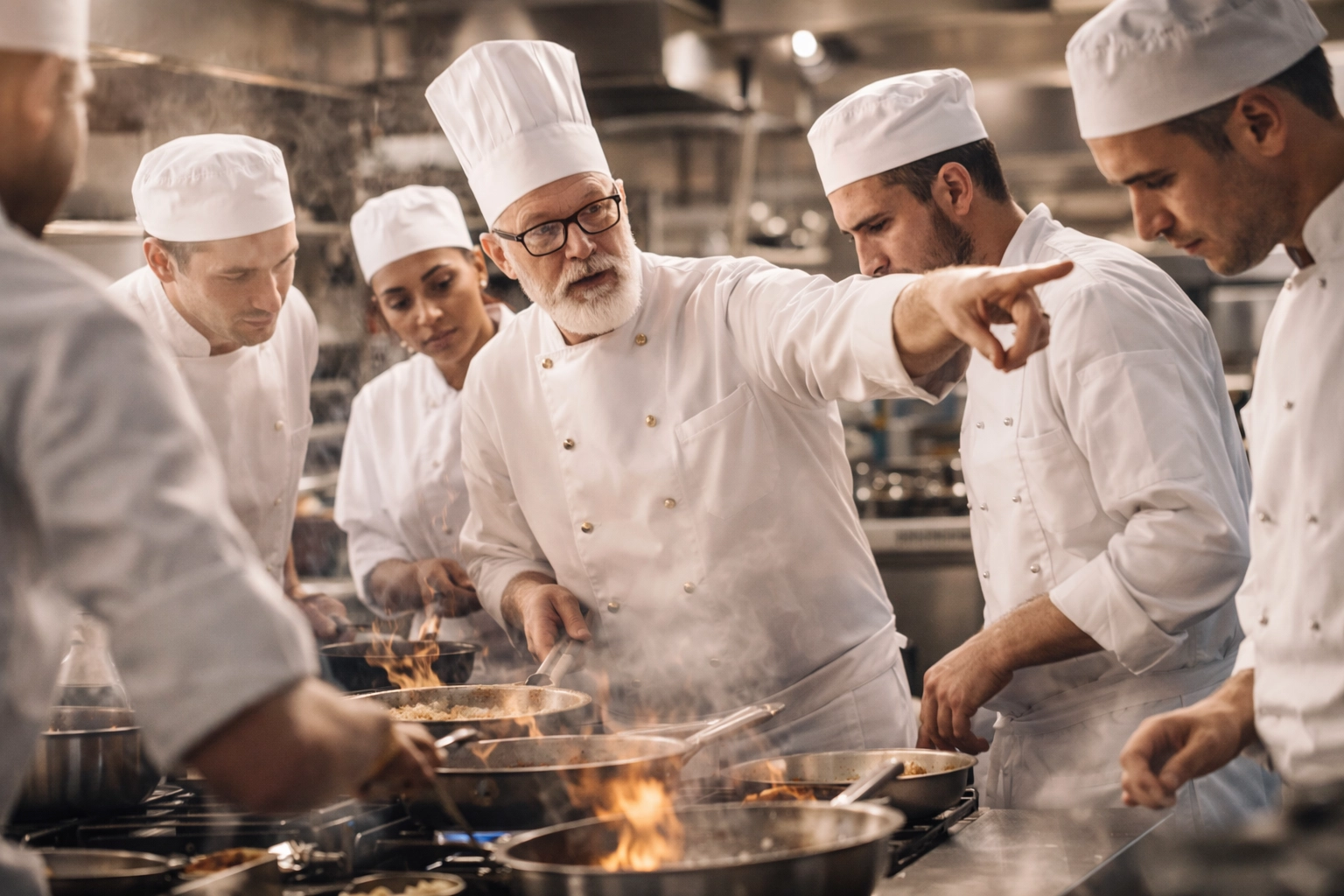
Kitchen Leadership: When a Chef Becomes a Team Builder
How a Chef Builds a Strong Team in a High-Pressure Kitchen
A kitchen is not just a place where food is prepared. It is a fast-moving, high-pressure human environment shaped by timing, emotions, and split-second decisions. In such a space, technical skill alone is not enough. A professional chef must also be a leader—someone who knows how to manage people before managing plates.
True kitchen leadership is not measured by raised voices or strict control, but by the ability to bring a team together, build trust, and turn daily pressure into focused, disciplined performance.
The Chef as a Leader, Not Just a Supervisor
A chef-leader does not stand above the team; they stand within it. They know when to step in and when to step back. Their role goes beyond supervision—it includes guidance, support, and creating an environment where every team member feels involved in the success of the kitchen.
When leadership is clear, stability increases, confusion decreases, and everyone understands their role without constant correction.
Clear Direction Without Complexity
Strong leaders communicate simply.
Clear instructions, defined responsibilities, and realistic expectations are essential in a kitchen, where there is no room for misunderstanding.
A good chef corrects without humiliating, teaches without pressure, and treats mistakes as learning moments rather than failures.
Motivation Makes the Difference
A cook who feels appreciated works with a different energy.
A sincere word, timely recognition, or acknowledgment during a stressful service can change the entire atmosphere of the kitchen.
Motivation is not about praise—it is about respect. When effort is seen, commitment follows naturally.
Clear Goals Create Focus
A team without direction quickly loses momentum.
When goals are clear—whether developing a new menu, improving consistency, or increasing efficiency—work becomes organized and progress measurable.
The leader’s role is to set the direction and keep the team aligned with it.
Communication Is the Backbone
Many kitchen problems are not technical—they are communicative.
A strong leader speaks clearly, listens carefully, and allows space for dialogue.
Good communication reduces tension, prevents errors, and strengthens team cohesion.
Pressure Reveals True Leadership
Peak service moments expose real leadership.
Does the leader stay calm?
Do they make quick decisions without panic?
Do they control the rhythm instead of feeding the chaos?
Calmness under pressure is not weakness—it is reassurance.
Trust and Teamwork
A strong kitchen is built on trust, not fear.
When team members feel heard and valued, collaboration becomes natural, and responsibility is shared.
A leader who builds trust does not need to impose authority—the team follows willingly.
Creativity Needs Space
Creativity cannot exist in a closed or tense environment.
Smart leaders encourage ideas, allow experimentation, and see mistakes as part of growth rather than something to punish.
This is how a kitchen moves from repetition to innovation.
Conclusion
Kitchen leadership is not a title—it is a daily responsibility.
When a chef combines experience, emotional intelligence, and calm authority, the kitchen becomes more than a workplace—it becomes a unified team striving for excellence.
Cooking is an art.
Leadership creates sustainability.
By:
Chef Ahmad Maadarani